
一段と涼しくなってきましたね。
今年は異常気象が続き、日本各地で洪水などの大きな災害も起きました。
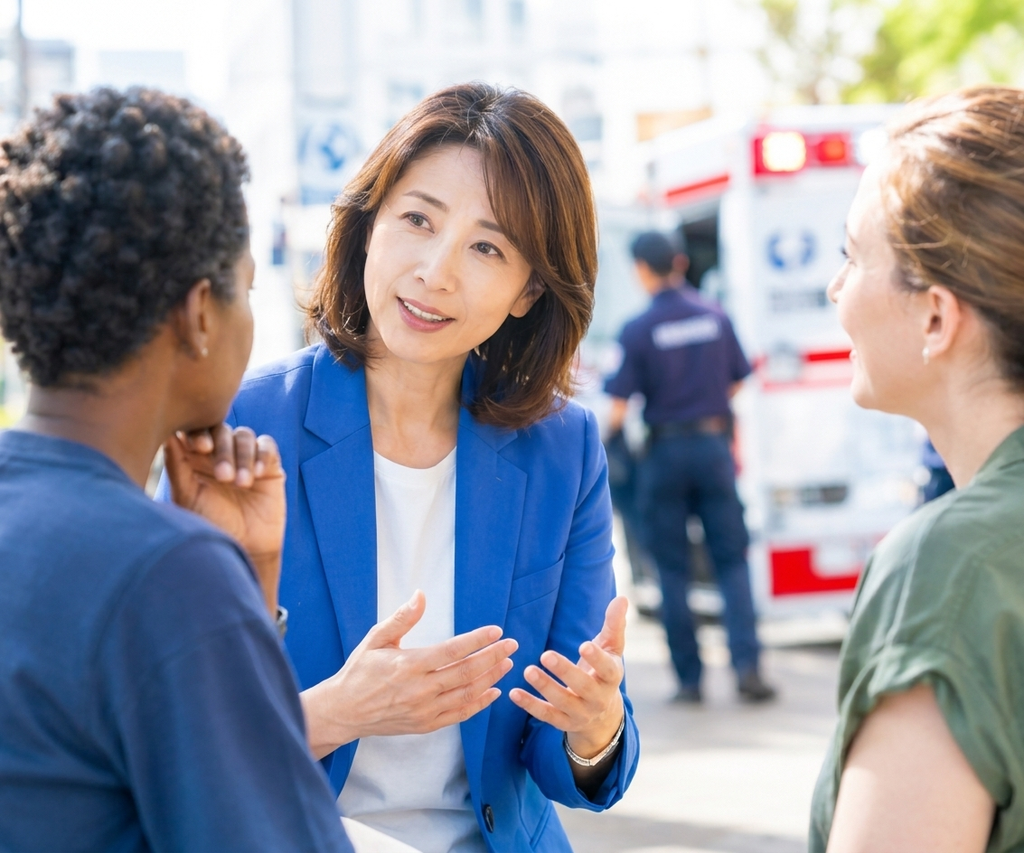
緊急避難は日本人にとっても難しいもの。まして、日本語や日本の生活にまだ慣れていない外国人にとっては、さらに大変なのではないでしょうか。
実は私自身、以前、家の近所で火事が起きたとき、慌ててしまい、119番ではなく、アメリカの緊急番号「911」に電話をかけてしまったことがあります。
そんな私ですが、何年か前の今頃、実際に「119番」を呼んでいただいた経験もあります。
大手スポーツクラブで指導を終え、生徒さんたちと話しながら歩いていたときのこと。
なんと私は、透明なガラスに思いっきり激突!
「えっ、そこにガラスがあったの!?」あまりにも透明で、まったく気づかなかったのです。
顔はものすごく腫れ、救急車を呼んでいただくことになりました。
幸い、数時間ずっと氷で冷やしたことで、腫れも無事に引きましたが、一時は本当にどうなることかと思いました。
私は、医療専門の通訳者を目指している生徒さんを指導していますが、こうした経験をすると、専門家だけでなく、私たち一人ひとりが外国人を助けられるようになれたらいいなと思います。たった一言でも、緊急時には大きな助けになります。
日本人にとって当たり前のことが、外国人にとっては当たり前とは限りません。
まして、災害や事故など、突然の緊急事態ではなおさらです。
異文化コミュニケーションというと、普段の仕事やビジネスの場面を思い浮かべがちです。
でも、本当に必要になるのは、予想もしない事故や災害が起きた瞬間かもしれません。
「こんなときに英語で助けられたらいいな」と思う場面があれば、ぜひ教えてください。
【I Called 911 Instead of 119 — What I Learned About Helping Foreigners in an Emergency】
It’s getting noticeably cooler here in Japan.
This year, we’ve experienced one extreme weather event after another, with major floods and other disasters occurring in different parts of the country.
Evacuating in an emergency can be difficult even for Japanese people.
For foreigners who are still getting used to the Japanese language and everyday life in Japan, it can be even more challenging.
In fact, I once panicked when a fire broke out near my home and accidentally called 911 — the emergency number in the U.S. — instead of 119, Japan’s emergency number.
Ironically, around this time of year several years ago, I had an experience where someone actually called 119 for me.
I had just finished teaching at a major sports club and was walking with some of my students when…
BANG! I walked straight into a glass wall! “Wait… there was glass there!?”
It was so incredibly clear that I hadn’t noticed it at all.
My face became extremely swollen, and someone had to call an ambulance for me.
Fortunately, after keeping it iced for several hours, the swelling eventually went down. But for a while, I honestly had no idea what was going to happen.
I currently teach students who are training to become medical interpreters. Experiences like this make me think that it would be wonderful if not only professional interpreters, but each of us could learn how to help foreigners in an emergency.
Sometimes, even one simple sentence can make a huge difference when someone is in trouble.
What seems obvious to Japanese people may not be obvious to someone from another country.
And when an accident or disaster happens unexpectedly, the situation can become even more confusing.
When we hear the term intercultural communication, we often think about our everyday work or business situations.
But perhaps the moment we need it most is when something completely unexpected happens — an accident, a disaster, or some other emergency.
Have you ever been in a situation where you thought,“I wish I knew how to help in English right now”?
I’d love to hear your experiences.
#InterculturalCommunication #ForeignEmployeeManagement #GlobalTalent
#GlobalTalentDevelopment #DisasterCommunication #MulticulturalSociety
#BusinessEnglish #CommunicationSkills #SupportingForeigners #CorporateTraining












COMMENT