
「外国人社員が真剣に話を聞いていないように見える」
「数分の遅刻を繰り返されている」「日本語でマナー研修をしても、一向に定着しない」
今、多くの日本企業が直面しているこの「摩擦」。
それは、個人の性格や語学力の問題ではありません。
組織の中に「共通のOS(行動基準の型)」が存在しないことからくる、構造的なシステムエラーです。
私は長年、ビジネス英語とコミュニケーションの現場で指導を続けてきました。 そこで確信したのは、「異文化理解」とは相手に合わせることではなく、お互いが「プロとしての共通の型」を使いこなすことだということです。
例えば、食事のマナー1つとっても、100カ国あれば100通りの「正解」があります。
自分の「普通」を押し通せば衝突が起き、相手に合わせすぎれば自分を見失う。
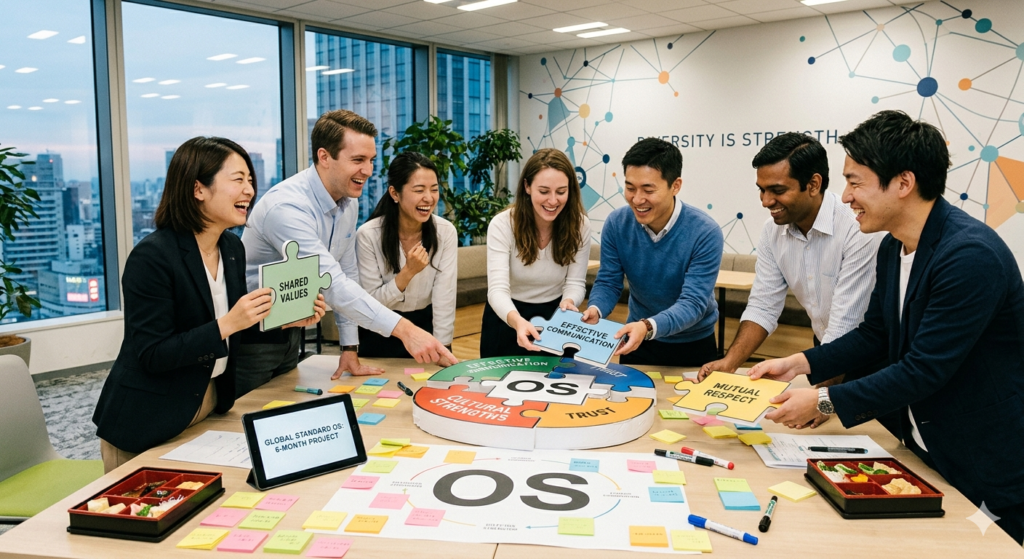
だからこそ、私が提唱するのは『Global Standard OS 構築プロジェクト』です。
これは、異文化を「摩擦」ではなく、利益を生む「強み」に変えます!
「郷に入っては郷に従え」という根性論ではありません。
例えば、日本食を味わう時のように、五感を使って「プロとしての共通の型(フォーム)」を楽しみながらインストールしていく。
型が揃うと、不思議と「信頼」が生まれ、それが「利益」へと繋がっていきます。
文化の違いを、企業の強みとなる戦力にしませんか?
6ヶ月かけて、みんなが同じ基準で、もっと自由に、もっと成果を出せるチームへ。
あなたの組織の「OS」、そろそろ最新版にアップデートしてみませんか?
🖥What Japanese companies need is not language training, but the establishment of a “common OS.”
“Foreign employees seem like they aren’t listening seriously.”
“They’re repeatedly arriving a few minutes late.” “Even after conducting etiquette training in Japanese, the lessons just don’t stick.”
This “friction” is what many Japanese companies are facing today.
It isn’t a matter of individual personality or language proficiency.
It’s a structural system error stemming from the absence of a “common OS (a standard framework for behavior)” within the organization.
I have spent many years coaching in the field of business English and communication. Through this experience, I have come to realize a fundamental thing: “cross-cultural understanding” does not mean adjust to other person, but rather both parties mastering a “shared professional framework.”
Take table manners, for example. With 100 countries, there are 100 “correct” ways.
If you insist on your own “norm,” conflicts arise; if you adapt too much to the other person, you lose sight of yourself.
That is precisely why I advocate for the “Global Standard OS Construction Project.”
This transforms cross-cultural differences from “friction” into a “strength” that generates benefits!
This isn’t about blindly following the adage “When in Rome, do as the Romans do.”
Instead, much like savoring Japanese cuisine, you use your five senses to enjoy and internalize the “common professional framework” (form).
Once this framework is in place, trust naturally emerges, leading to tangible benefits.
Why not turn cultural differences into a strategic asset for your company?
Over the course of six months, I’ll build a team where everyone operates by the same standards, works more freely, and achieves greater results.
Isn’t it time to update your organization’s “OS” to the latest version?
#GlobalTalentDevelopment #Cross-CulturalManagement #OrganizationalDevelopment #BusinessCommunication #GlobalStandardOS #DiversityManagement #CorporateTraining #BusinessStrategy #Leadership #BusinessEnglish















COMMENT